Dozer vs Excavator for Earthwork: Clearing, Pushing, and Digging
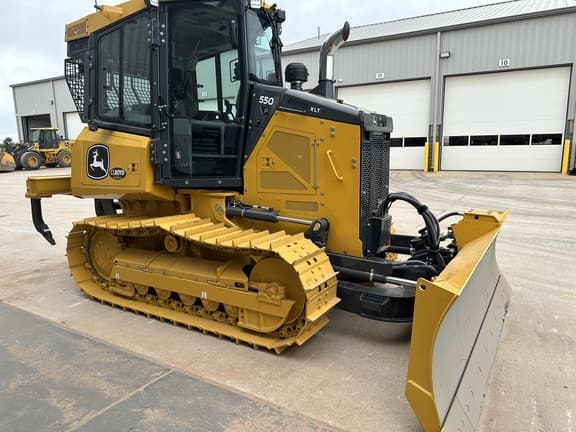
Earthwork crews argue about dozers and excavators for a reason: both move dirt, but they move it differently. One is built to push and spread; the other is built to dig, lift, and place. Getting the fork wrong costs time on the first cut and money on the wrong undercarriage or bucket wear.
Track & Blade is a marketplace that connects buyers and sellers of used construction equipment. We are not the seller of record, we do not run a yard, and we do not clear or dig your site. Use this guide to match the machine to the work, then browse live listings and inquire to connect with the seller.
Pushing vs digging — the core fork
A dozer (bulldozer) puts a blade in front of tracked mass and moves material by pushing. Cut-and-fill, stripping topsoil across a pad, and rough grade are natural dozer work. The machine stays low, stays planted, and keeps material in front of the blade.
An excavator digs with a boom, stick, and bucket. It excavates below grade, casts spoil, loads trucks, and works selectively around utilities, footings, and structures. The machine rotates; the dig happens where the bucket can reach.
If the day’s job is mostly horizontal mass movement, lean dozer. If it is mostly below-grade dig, lift, and place, lean excavator. Everything else in this guide is detail around that fork.
| Work | Usually leads |
|---|---|
| Horizontal mass movement — clear, strip, cut-and-fill, rough grade | Dozer |
| Below-grade dig, lift, and place — trench, foundations, loading trucks, selective work | Excavator |
| Many commercial and civil jobs | Both, in sequence — compare each class on its own listing |
When a dozer leads (clearing, cut-and-fill, rough grade)
Dozers usually lead when you need to:
- Clear and strip across open ground — brush, topsoil, and overburden pushed into windrows or fill areas.
- Cut and fill a pad or corridor where material stays on site and must be moved horizontally.
- Rough grade before a finer blade or grader pass — establish elevations and leave a working surface.
- Build temporary access or push spoil where a bucket cycle would be slow and repetitive.
A dozer is not a trench machine. It is also not the first choice for loading highway trucks from a pile when cycle height and dump clearance matter. For mass push and rough grade on tracks, it earns its keep.
When an excavator leads (trenches, foundations, loading, selective dig)
Excavators usually lead when you need to:
- Trench or dig foundations below existing grade with control over depth and spoil placement.
- Load trucks from a dig or a stockpile with reach and dump height.
- Work selectively around utilities, walls, trees, or finished edges where a full blade push would be careless.
- Demolish or sort material with a bucket, thumb, or specialty attachment.
An excavator can spread spoil and do light grading with the right bucket and operator, but it will not match a dozer’s efficient horizontal push over a large pad. Dig first; push second.
Jobs that usually need both (sequencing, not “buy both from us”)
Many commercial and civil jobs run both machines in sequence — not because every buyer needs two purchases, but because the work phases differ.
A common pattern:
- Dozer strips and roughs the pad or road corridor.
- Excavator digs utilities, ponds, or footing trenches and loads trucks.
- Dozer (or later a grader) returns for shape and drainage before base and finish.
Crews that only own one class often borrow, rent, or subcontract the other phase. That is a fleet and schedule decision, not a reason to force one machine to do the other’s job poorly. On Track & Blade you compare live asks in each class independently; you are not buying a “package from our yard.”
Ground conditions and access
Ground and access can flip a borderline call.
- Soft, wet, or steep cut — both machines are tracked, but flotation, track width, and machine weight still matter. Confirm undercarriage condition and how the seller describes typical use.
- Tight urban or residential dig — excavators with reduced or zero tail swing often fit where a dozer blade and length will not. Sibling size guidance on excavators covers access bands without repeating them here.
- Open rural cut-and-fill — dozers shine when there is room to push long distances and stage spoil.
- Rock and hard digging — rippers on dozers and digging teeth / hammers on excavators change capability; verify attachments on the listing rather than assuming every unit is rock-ready.
Access includes gates, bridges, and trailer constraints. Transport is between you and the seller once you inquire. Track & Blade does not haul equipment; freight follows the seller’s terms.
Attachments that change the story (ripper, thumb — high-level)
Attachments shift the fork without erasing it.
- Dozer ripper — helps break hardpan or frost before the blade can push. Useful on tough sites; still a push machine afterward.
- Excavator thumb / coupler / specialty buckets — turn a digger into a sorting and placement tool. Great for demo and utility; not a substitute for mass dozer push.
- Blade on some excavators — helps backfill and light grading. Convenient, not a dozer replacement on large cut-and-fill.
Confirm what stays with the asking price. A listing without the attachment you need is a different machine for your job.
Used buying notes: hours, undercarriage, blade/bucket wear
Read dozer and excavator cards with wear in mind:
- Undercarriage — track, rollers, idlers, sprockets. Photos matter more than a casual “good u/c” line.
- Blade or bucket — cutting edges, corners, moldboard/bucket floor, pin and bushing play. Earthwork eats steel.
- Hours and year together — quarry, demo, and rocky hours wear differently than light site work. Application severity beats vanity-low meters.
- Asking price as a conversation starter — compare similar configurations and included attachments, then inquire.
- Seller next steps — cold start, walkaround, paperwork, and transport terms are buyer–seller.
For a deeper pass on hours vs year vs ask, and a pre-buy checklist, see How to Read Hours, Year, and Asking Price on Used Construction Equipment and Checklist: What to Verify Before You Buy Used Heavy Equipment on a Marketplace.
Browse dozers and excavators on Track & Blade
When the push-vs-dig fork is clear, match it to live inventory.
- Browse used dozers when clearing, cut-and-fill, or rough grade leads the work.
- Browse used excavators when trench, foundation, loading, or selective dig leads.
- Widen across classes on inventory if the job still points both ways.
- Need help navigating a listing? Contact — or call (405) 873-7772 / email sales@trackandblade.com.
Track & Blade connects buyers and sellers. Pick the machine that matches how the dirt has to move, inquire on the listing, then work inspection and transport out with the seller.