How to Choose Excavator Size for the Job (Ton Class, Reach, and Transport)
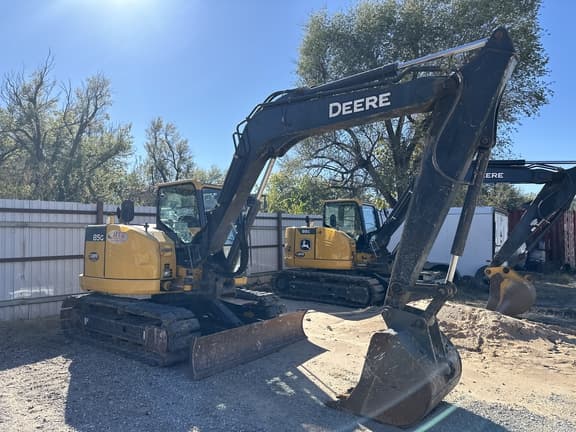
Picking an excavator starts with the work in front of you, not with a model number on a brochure. Dig depth, reach, site access, and how the machine moves between jobs matter more than chasing a familiar badge. Track & Blade is a marketplace that connects buyers and sellers of used construction equipment — we are not the seller of record and we do not haul iron for you. Narrow the size fork here, then browse live listings and connect with the seller.
Start with the job, not the model
Before you compare hours or asking price, write down what the machine has to do on a typical day.
- What are you digging? Utility trench, basement, pond, footings, demolition, or loading trucks?
- How tight is the site? Residential side yards, urban alley work, and indoor tear-outs punish a long tail swing. Open cut-and-fill is more forgiving.
- What else is on site? Dozers, loaders, or dump trucks that set the cycle pace? An excavator that outruns (or starves) the rest of the crew is the wrong size.
- How often does it move between jobs? A machine that trailers cleanly on the trailers you already own often beats a bigger digger you cannot legally or safely move.
Job notes beat brochure fantasy. Once those answers are clear, ton class and configuration start to make sense.
Ton class and operating weight — how buyers talk about size
Contractors and sellers usually talk size in ton class (a shorthand for operating weight bands) rather than horsepower alone. Treat those bands as a shared language for comparing listings — not as a promise that every machine in a band digs the same trench.
Compact / mini vs mid-size vs larger production machines
Think in three educational bands. Exact cutoffs vary by OEM and market; when you need official figures, verify them on the model’s manufacturer literature or with the seller — do not invent a number from a blog.
- Compact / mini: Tight access, lighter utility, landscaping, and jobs where a full-size machine will not fit the gate. Often right when transport is a pickup-and-trailer problem rather than a permit problem.
- Mid-size: Everyday production digger for many commercial and municipal crews — serious trench and foundation work without a quarry-machine footprint.
- Larger production machines: Mass excavation, deep cut, high cycle counts, and sites with room to swing and stage. Heavier transport planning usually comes with them.
When you open a listing, match the advertised class and configuration to your job notes — not to the largest machine you can afford on paper.
| Size band | Typical job cues | Transport (conceptual) |
|---|---|---|
| Compact / mini | Tight access, lighter utility, landscaping, and jobs where a full-size machine will not fit the gate | Often a pickup-and-trailer problem rather than a permit problem |
| Mid-size | Everyday production digger for many commercial and municipal crews — serious trench and foundation work without a quarry-machine footprint | Plan the move against the trailers and permits you actually use |
| Larger production machines | Mass excavation, deep cut, high cycle counts, and sites with room to swing and stage | Heavier transport planning usually comes with them |
Exact cutoffs vary by OEM and market. Verify official figures on the model’s manufacturer literature or with the seller — this table does not invent tonnage or horsepower.
Dig depth, reach, and bucket work
Dig depth and reach are related but not the same. Depth is how far down the bucket goes; reach is how far out you can work from the tracks. A deep trench in soft spoil may need a different boom and stick story than a shallow, long reach over a bank or into a truck.
Ask yourself:
- Is the limiting factor depth (sewer, footing) or reach (loading over a wall, cleaning a slope)?
- Will you mostly dig and cast, dig and load trucks, or dig and place pipe with a thumb or coupler?
- Do you need a standard digging bucket, a ditching bucket, or frequent attachment swaps?
Listings rarely show every geometry number. Use photos and seller conversation to confirm boom/stick setup, coupler type, and whether the machine is set up for the work you actually do. Prefer job fit over chasing a advertised dig-depth figure you cannot verify.
Tail swing and site access
Tail swing is how much of the counterweight hangs past the tracks when you rotate. On open dirt it is a footnote. Next to a finished wall, a parked truck, or a house foundation, it decides whether the machine is usable.
- Conventional swing machines often give you more counterweight mass for digging stability, but they need room behind them.
- Reduced / zero tail swing configurations trade some of that for the ability to work in a lane, against a wall, or inside a structure.
Also check gate width, overhead lines, slab capacity if you are working on a floor, and whether you can stage spoil without boxing yourself in. Size that cannot access the dig is the wrong size.
Transport and trailer constraints (buyer logistics — not T&B hauling)
Transport is a buyer–seller logistics problem. Track & Blade does not haul equipment; freight and delivery follow the seller’s terms once you are connected. Plan the move before you fall in love with a listing.
- Confirm transport height, width, and weight against the trailers and permits you actually use.
- Ask whether the machine ships with the boom/stick configuration shown, or if something has to come apart.
- Factor loading method, tie-down points, and who is responsible for arranging the carrier.
A compact excavator that rolls onto a trailer you already own can beat a mid-size machine that needs a special move every time you leave the yard. Landed cost includes the trip — plan it with the seller, not as a marketplace freight promise.
Attachments and auxiliary hydraulics (high-level)
The right size machine with the wrong hydraulics package still fails the job. At a high level, check:
- Coupler — pin-on vs quick coupler; brand compatibility with the attachments you already own.
- Auxiliary hydraulics — single or dual aux, whether you need flow for a hammer, thumb, tilt, or mulcher.
- Thumb / grapples / specialty tools — whether they stay with the machine in the asking price.
You do not need OEM flow charts to start. You do need a clear list of what must work on day one, then confirm configuration with the seller before you travel for an inspection.
Compact excavator vs standard excavator hub — when to look at each
Track & Blade lists excavators across class hubs so you can browse by the size story that matches your job.
- Start on used excavators when you need mid-size through larger production diggers for commercial trench, foundation, and mass work. That hub is the primary place to compare live hours, year, and asking price.
- Open used compact excavators when access, residential work, or light utility is the driver. Inventory there can be thinner — treat it as a focused companion hub, not a guarantee of deep stock.
Sibling guides on dozer vs excavator and backhoe vs excavator cover those forks without repeating size-class tables.
Reading used excavator listings (hours, year, ask, configuration)
Every useful listing card tells a short story. Read it in this order:
- Configuration first — boom/stick, coupler, aux, thumb, blade, cab vs canopy. Wrong setup wastes the right ton class.
- Hours and year together — a low-hour machine that lived in demolition can be harder used than higher hours on light utility. Application severity matters.
- Asking price as a starting point — not an appraisal. Compare across similar configurations, then ask the seller what is included.
- Photos — undercarriage, boom pin play, bucket wear, leaks, glass, and whether the machine looks like it was maintained or parked hard.
- Seller location and next steps — inquiry connects you to the seller for inspection, paperwork, and transport terms.
For a deeper pass on hours vs year vs ask, see How to Read Hours, Year, and Asking Price on Used Construction Equipment.
Browse live excavators on Track & Blade
When the size fork is clear, match it to live iron — not to a brochure table.
- Browse used excavators for the primary inventory depth across standard classes.
- Check used compact excavators when tight access is the job.
- Scan Super Sale for featured asks across classes.
- Questions about navigating a listing? Contact — or call (405) 873-7772 / email sales@trackandblade.com.
Track & Blade connects you with the seller. Inspection, payment, and how the machine moves are between you and that seller. Pick the ton class that fits the trench and the trailer, then inquire on the listing that matches.