Motor Grader vs Dozer for Road and Site Prep
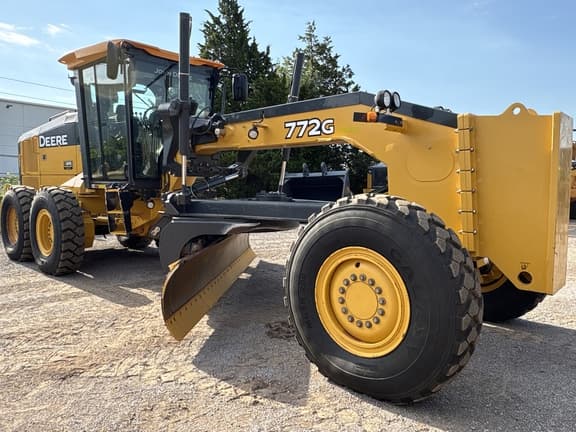
Rough grade and finish grade are not the same job. A dozer moves mass and establishes shape; a motor grader planes, crowns, and leaves a surface you can build on. Crews that treat them as interchangeable usually spend the last week fixing what the wrong blade left behind.
Track & Blade is a marketplace connecting buyers and sellers of used construction equipment. We are not the seller of record, we do not stock a yard, and we do not build roads or grade sites for you. Use this fork to decide which machine leads your prep work, then browse live listings and connect with the seller.
Rough push vs finish blade — roles on the same job
A dozer is a tracked push machine. On road and site prep it strips, cuts, fills, and leaves a rough working grade — elevations in the right neighborhood, material where it needs to be, surface still coarse.
A motor grader is a wheeled (or sometimes all-wheel-drive) finish blade on a long wheelbase. The moldboard sits between the axles so the operator can cut fine, carry a windrow, set crown and cross-slope, and leave a surface ready for base, gravel, or paving prep.
Same corridor. Different phase. The dozer gets you close; the grader gets you true.
| Role | Machine |
|---|---|
| Rough push — strip, mass cut-and-fill, establish a working grade | Dozer |
| Finish blade — plane, crown, drainage, gravel maintenance | Motor grader |
| Early and heavy phases on a new alignment or pad | Dozer |
| Fine grade, camber, and reshape after material is roughly in place | Motor grader |
What a dozer does best on road/site prep
Dozers usually own the early and heavy phases:
- Clearing and stripping topsoil and unsuitable material across the alignment or pad.
- Mass cut-and-fill where dirt must move horizontally in volume.
- Rough grade — establish subgrade elevations before anyone chases tenths with a moldboard.
- Pushing spoil and building temporary access where flotation and traction matter more than a fine edge.
If your week is mostly “get the dirt from A to B and leave a workable rough,” start with a dozer. Expecting a grader to replace that mass push is the wrong tool and a fast way to wear a moldboard.
What a motor grader does best (camber, drainage, fine grade)
Motor graders usually own the finishing and maintenance phases:
- Fine grade on subgrade and aggregate — smoothing, cutting high spots, filling lows with controlled blade work.
- Crown, camber, and cross-slope so water sheds the way the design intends.
- Drainage shaping — ditches, shoulders, and surface flow paths that a dozer blade is too blunt to refine.
- Maintaining gravel and dirt roads — reshaping washboards and reclaiming material from the edges over time.
Graders can move material, but they are not mass earthmovers. They excel when the dirt is already roughly in place and the job is accuracy, drainage, and ride.
Sequencing: when contractors typically run both
On many road and commercial site jobs the sequence is deliberate:
- Dozer (and often excavator or trucks) handles clear, cut, fill, and rough grade.
- Compaction and moisture work happen on lifts as the plan requires.
- Motor grader cuts finish grade, sets slope, and prepares for base or surface.
Municipal and ranch crews that maintain miles of gravel may live on a grader day to day and only call a dozer when a section needs rebuild. Production earthwork crews often reverse that — dozers and excavators daily, grader for the finish pass.
You do not have to buy both from one place. Compare each class on its own merits, then decide what your crew actually runs. Track & Blade lists machines from sellers; sequencing is your operations call.
Terrain and undercarriage (tracks vs wheeled grader)
Undercarriage and travel surface matter for ownership and site fit.
- Dozer (tracks): Better flotation and traction on soft, steep, or disturbed ground. Undercarriage wear is a primary used-buying concern — rollers, idlers, sprockets, and track condition belong in the photo set.
- Motor grader (wheels): Built for travel and blade work on prepared or maintained surfaces. Soft mud and deep ruts punish graders; they want a surface that can support wheeled traction. Tire condition, articulation, and circle/moldboard play are the parallel wear story.
If most of your prep is still raw cut on soft dirt, the dozer phase comes first — sometimes exclusively on small jobs. If most of your year is maintaining existing roads or finishing already-placed material, the grader is the daily driver.
When one machine is enough for a smaller job
Not every driveway pad or short private road needs both.
- Dozer-only can be enough when the owner accepts a working rough grade, or when a compact site never needs crown and fine tolerance.
- Grader-only can be enough when material is already placed, the subgrade is close, and the work is reshape and finish — or ongoing gravel maintenance.
- Borrow / subcontract the other phase when you own one class and the job occasionally needs the other. That is common and often smarter than forcing a mismatched purchase.
Be honest about tolerance. “Close enough with a dozer” is fine for some pads and a problem for drainage-critical roads.
Used listing checks (moldboard/blade wear, hours, year, ask)
Read grader and dozer cards for the wear that actually costs money:
- Blade / moldboard — cutting edges, end bits, moldboard face, circle and drawbar play on graders; blade edge and push-arm/C-frame condition on dozers.
- Undercarriage or tires — track packages on dozers; tire carcass, tread, and any all-wheel-drive notes on graders.
- Hours and year together — road maintenance hours and rocky cut hours are different lives. Application beats a low meter alone.
- Configuration — ripper on dozers; scarifier, tip control, and cab/grade-control mentions on graders when shown. Verify what is included in the ask.
- Asking price as a starting point — compare similar setups, then inquire for inspection and seller terms.
Transport and delivery follow the seller’s terms. Track & Blade does not haul equipment.
For hours vs year vs ask in more depth, and a pre-buy checklist, see How to Read Hours, Year, and Asking Price on Used Construction Equipment and Checklist: What to Verify Before You Buy Used Heavy Equipment on a Marketplace.
Browse motor graders and dozers on Track & Blade
When rough-vs-finish is clear, match it to live inventory.
- Browse used motor graders when fine grade, crown, drainage, or gravel maintenance leads.
- Browse used dozers when clearing, cut-and-fill, or rough grade leads.
- Widen the search on inventory if you are still comparing classes.
- Need help navigating a listing? Contact — or call (405) 873-7772 / email sales@trackandblade.com.
Track & Blade connects buyers and sellers. Choose the blade that matches the phase of work, inquire on the listing, then settle inspection and transport with the seller.