Wheel Loader vs Compact Track Loader for Material Handling
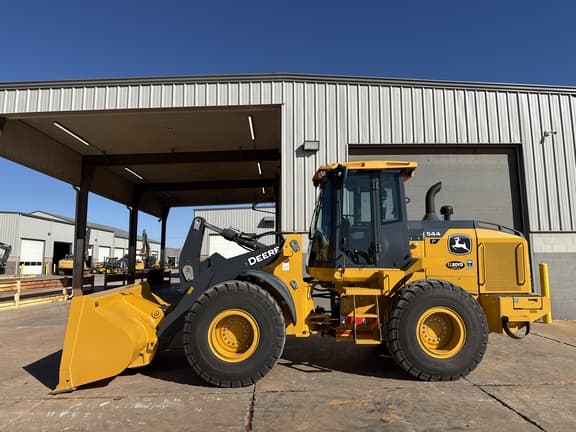
Both machines load material. They are not the same tool. A wheel loader is built for production load-and-carry and truck loading on firm ground. A compact track loader (CTL) is built for tight sites, attachment work, and soft or disturbed surfaces. Buyers who blur the line often end up with a machine that is either oversized for the gate or undersized for the cycle.
Track & Blade is a marketplace connecting buyers and sellers of used construction equipment. We are not the seller of record and we do not run a demo yard. Use this comparison to pick the material-handling fork that matches your sites, then browse live listings and inquire to connect with the seller.
What each machine is built to do
A wheel loader is a rubber-tired production loader: larger bucket volumes in typical configurations, longer load-and-carry cycles across a yard or pit, and truck loading as a primary job. The operator faces a machine designed around pile work and travel on prepared surfaces.
A compact track loader sits in the compact equipment family. It shares attachment habits with skid steers, runs on rubber tracks, and earns its keep on residential, landscaping, utility, and mixed jobs where flotation and a small footprint matter as much as the bucket.
Shared word: “loader.” Different scale, different ground contact, different day-to-day job.
Travel surface: pavement and stockpile yards vs soft/disturbed ground
Surface is often the first honest filter.
- Pavement, compacted yards, gravel stockpiles — wheel loaders are at home. Tires travel cleanly between piles and trucks when the ground supports them.
- Soft fill, mud, finished turf, disturbed residential grade — CTLs usually win on flotation and lower ground disturbance. Tracks spread weight; wheeled loaders can rut soft sites or simply refuse to work efficiently.
- Mixed weeks — many fleets keep a CTL for site work and a wheel loader (or hire one) for yard and truck loading. Owning both is a utilization question, not a rule.
If your material handling mostly happens on a firm commercial yard, start with the wheel loader side of the fork. If it mostly happens on soft or finished ground with frequent tool changes, start with the CTL.
Lift, bucket size, and truck-loading height (conceptual — no invented specs)
Think in roles, not brochure numbers.
- Wheel loaders are typically chosen when truck loading volume and dump height drive the day — charging hoppers, loading highway dumps from stockpiles, moving aggregate across a yard. Exact capacities and hinge-pin heights vary by model; verify them on the listing and with the seller or OEM literature.
- CTLs load trucks too, especially smaller dumps and landscaping trucks, but their strength is often versatility and access rather than raw production tonnage per hour. Rated operating capacity and lift geometry still vary — confirm configuration rather than assuming every “same size” CTL lifts the same.
Do not invent a dump-height or bucket-yard figure from a blog. Match the listing’s stated configuration to the trucks and piles you actually run.
Attachment versatility vs production load-and-carry
This is the second big fork.
CTLs usually win on attachment variety: buckets, forks, grapples, brooms, trenchers, and specialty tools swap through the day when hydraulics and coupler match. Material handling is one of many jobs.
Wheel loaders can run forks and other tools, but many buyers purchase them primarily as bucket production machines — load, carry, dump, repeat. Attachment culture exists; it is rarely the same as a compact track loader’s tool-belt lifestyle.
If your week is “one attachment after another on a tight site,” lean CTL. If your week is “keep trucks moving from a pile,” lean wheel loader. Optional browsing of used attachments can clarify what you still need after the base machine is chosen — without treating attachments as a substitute for the right loader class.
Maneuverability and site footprint
- CTL: Narrower sites, residential gates, indoor or semi-indoor work, and jobs where a full-size loader cannot turn. Compact footprint is the point.
- Wheel loader: Needs room to articulate, stage piles, and approach trucks. Excellent where the yard or pit is designed for loader traffic; awkward where it is not.
Also weigh how often the machine trailers between jobs. Compact machines often move on trailers you already own; larger wheel loaders may change permit and trailer planning. Transport is buyer–seller logistics. Track & Blade does not haul equipment; freight follows the seller’s terms.
Ownership forks tire/track vs larger loader maintenance (educational)
No honest guide can invent ownership dollars that fit every duty cycle. Plan for where the money goes:
- CTL: Track packs, rollers, idlers, sprockets. Soft and rocky sites both wear tracks — differently, but they wear. Undercarriage photos are often the make-or-break set on a used card.
- Wheel loader: Tires, rims, pins and bushings, bucket wear, and the maintenance rhythm of a larger machine. Tire choice and yard abrasion matter; so does how hard the machine was run in quarry or demolition service.
Ask sellers what recent undercarriage or tire work was done. Treat “cheap hours” as incomplete until you know what is left on the tracks or rubber.
Decision chart: choose wheel loader if… / CTL if…
Lean wheel loader if:
- Most material handling is on firm yards, pits, or stockpile pads.
- Truck loading volume and cycle pace are the primary job.
- You need production load-and-carry more than a Swiss-army attachment platform.
- Site access allows a full-size articulated loader.
Lean CTL if:
- Soft, finished, or disturbed ground shows up most weeks.
- Tight access and frequent attachment changes define the day.
- Truck loading is occasional or limited to smaller trucks.
- You want compact flotation without stepping up to a full wheel loader footprint.
If the answer is still “both,” that is normal for mixed fleets. Start with the machine that matches your worst regular surface and your highest-volume material cycle, then compare live asks.
| Factor | Wheel loader | Compact track loader |
|---|---|---|
| Surface | Firm yards, pits, or stockpile pads | Soft, finished, or disturbed ground |
| Lift / cycle role | Production load-and-carry and truck loading — verify capacity on the listing, do not invent dump height | Versatility and access; truck loading is often occasional or limited to smaller trucks |
| Choose if | Truck-loading volume and cycle pace lead, and site access allows a full-size articulated loader | Tight access and frequent attachment changes define the day |
Browse live wheel loaders and CTLs
When the material-handling fork is clear, match it to live inventory.
- Browse used wheel loaders for production yard and truck-loading candidates.
- Browse used compact track loaders for compact, soft-ground, and attachment-heavy work.
- Optionally check used attachments once the base machine class is chosen.
- Need help navigating a listing? Contact — or call (405) 873-7772 / email sales@trackandblade.com.
Track & Blade connects buyers and sellers. Pick the loader that matches your ground and your cycles, inquire on the listing, then work inspection and transport out with the seller.