Smooth Drum vs Padfoot Compaction: Matching the Roller to the Soil
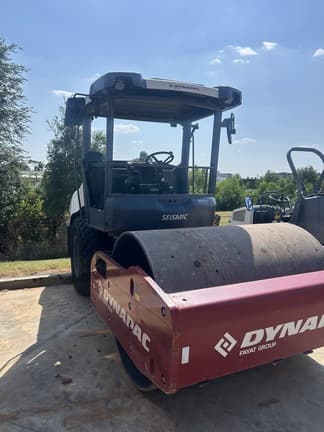
Buying a soil roller starts with the ground under the drum, not the badge on the hood. Smooth drum and padfoot (often called sheepsfoot in the field) compact differently because they contact and knead the soil differently. Match drum type to soil behavior first; brand and hours come second. Track & Blade is a marketplace that connects buyers and sellers of used construction equipment — we are not the seller of record, we do not provide compaction services, and we do not haul rollers for you. Use the soil fork below, then browse live compaction listings and connect with the seller.
Why drum type matters more than brand for first-pass choice
Two rollers in the same weight class can fail the same lift if the drum is wrong for the soil. Smooth drums excel when particles rearrange under pressure and vibration — typical of granular materials. Padfoot drums punch and knead cohesive soils so air voids close and lifts densify from the bottom of the lift upward.
Brand, cab options, and hour meters still matter on a used card. They do not override a soil mismatch. Write down what you compact most weeks (clay, silt, sand, gravel, mixed fill, base rock) before you fall in love with a photo of a clean paint job.
Smooth drum — granular soils, base, finish surfaces
A smooth drum roller presents a continuous steel (or sometimes rubber-coated) drum surface to the ground. It is the usual first choice when the material behaves like a granular or base product:
- Sands, gravels, and crushed rock that densify by particle rearrangement
- Aggregate base and subbase ahead of paving
- Finish passes where you want a smoother surface behind the drum
- Jobs where the roller may also proof-roll or seal a granular lift
Smooth drums are also common when the specification or superintendent expects a finished appearance on the lift — not a punched pad pattern. If your typical week is base rock, select fill that drains freely, or granular borrow, start on the smooth-drum side of the catalog.
That does not mean a smooth drum “fixes” wet clay. Cohesive soils that need kneading often punish a smooth drum with bridging, lamination, or endless passes that never hit density. Soil first; drum second.
Padfoot / sheepsfoot — cohesive soils and kneading action
A padfoot drum (field slang often includes sheepsfoot) uses protruding pads to penetrate and knead the lift. That action suits cohesive soils — clays and clayey silts — where densification depends more on remolding and driving out voids than on simple particle shuffle.
Padfoot strengths in plain terms:
- Cohesive fill and clayey borrow that need kneading, not just surface pressure
- Early passes on lifts that must be worked from within the lift thickness
- Earthwork spreads where clay shows up more often than clean gravel
- Specs and inspection habits that expect padfoot patterns before a smooth finish pass (when the job calls for that sequence)
Pads leave a textured surface. Many jobs follow padfoot work with a smooth drum or other finish method when the surface must be sealed or graded smooth. That is a sequencing choice on the job — not a reason to buy the wrong primary drum for your dominant soil.
| Soil / job | Usually points toward |
|---|---|
| Sands, gravels, crushed rock, aggregate base, finish appearance on the lift | Smooth drum |
| Cohesive fill, clays, and clayey silts that need kneading | Padfoot / sheepsfoot |
| Mixed fills or weather-driven moisture changes | Dominant-soil purchase, or two-pass thinking — not a brochure density claim |
Mixed soils and two-pass strategies (educational)
Real sites are rarely pure sand or pure clay. Mixed fills, varying borrow pits, and weather-driven moisture changes push crews toward flexible strategies:
- Dominant-soil purchase: Buy the drum that matches the soil you see most often; rent or borrow the other type for exceptions.
- Two-machine or two-pass thinking: Padfoot (or equivalent kneading) on cohesive lifts, then smooth drum for granular caps or finish — when the geotech or inspector’s expectations call for it.
- Same roller, wrong expectation: Swapping soils week to week without changing method is how density fights start. Drum type is part of method; moisture and lift thickness are the rest.
Track & Blade does not prescribe a means-and-methods plan for your contract. Treat this as buyer education for matching listings to the work you actually win — then confirm with your engineer, inspector, or crew lead when the job has formal compaction requirements.
Lift thickness, moisture, and density checks (high-level)
Drum choice fails in practice when lift thickness and moisture are ignored. Keep the checks high-level and field-practical — this is not lab advice or a substitute for project specifications.
- Lift thickness: Pads and smooth drums both need a lift thin enough for the energy to reach through the material. Over-thick lifts are a common reason “the roller won’t make density.”
- Moisture: Too dry and cohesive soils will not remold; too wet and you pump, rut, or seal the wrong moisture into the lift. Granular materials have their own workable windows.
- Density verification: Nuclear gauge, sand cone, proof roll, or whatever your job requires stays between you, the inspector, and your testing outfit. Marketplace listings do not certify that a used roller will hit someone else’s spec.
When you talk to a seller, ask what the machine compacted recently and how the crew ran lifts — application context beats a generic “runs good” line.
Vibratory vs static notes (brief)
Many soil rollers offer vibratory modes (and amplitude/frequency settings that vary by model) plus the option to run static. Vibration helps densify many granular and some mixed materials when used correctly; static passes matter for finish, sensitive structures, or materials that do not respond well to vibration.
Used listings may or may not spell out vibratory condition. Ask about:
- Whether vibration engages cleanly
- Recent drum or isolator work
- Whether the unit has been run mostly static or vibratory in its prior life
Do not invent amplitude numbers or “this setting hits X density” claims from a guide. Verify model features with the seller and OEM literature when you need official figures.
What to check on used compaction listings
Read a compaction card in this order:
- Drum type first — smooth vs padfoot (and whether shell kits or convertible notes appear). Wrong drum wastes the rest of the inspection.
- Hours and year together — abrasive base work and muddy clay work wear drums and components differently. Application beats vanity-low meters.
- Drum and scraper condition — pads worn flat, cracks, welds, scrapers, and water-spray systems (when equipped) show up in photos if you look.
- Vibration and propulsion — cold-start video, vibration engage, steering/articulation leaks, and travel issues.
- Asking price as a conversation starter — not a market appraisal. Compare similar drum types and configurations.
- Seller location and next steps — inquire to connect with the seller for inspection and transport terms. Freight follows the seller’s terms; Track & Blade does not haul equipment.
For a deeper pass on hours vs year vs ask, and a pre-buy checklist, see How to Read Hours, Year, and Asking Price on Used Construction Equipment and Checklist: What to Verify Before You Buy Used Heavy Equipment on a Marketplace.
Browse compaction equipment on Track & Blade
When the soil → drum fork is clear, open live inventory.
- Start on used compaction — compare rollers by drum story, hours, year, and asking price.
- Widen across classes on inventory if you are still sorting earthwork support machines.
- Check featured units on Super Sale when you are browsing asks across the catalog.
- Need help navigating a listing? Contact — or call (405) 873-7772 / email sales@trackandblade.com.
Track & Blade connects buyers and sellers. Match drum type to the soil you compact most, confirm vibration and drum condition with the seller, then inquire on the listing and work inspection and transport out between the parties.